Early Childhood Education

Early childhood education in Malaysia is widely accessible and increasingly valued by parents. Many families enroll their children in nurseries and kindergartens at an early age to build a strong foundation before primary school.

Private kindergartens often adopt internationally recognized teaching approaches such as the International Preschool Curriculum (IPC), Montessori, Reggio Emilia, and Waldorf, providing diverse and holistic learning experiences.
Public Primary and Secondary Education

The Malaysian government provides free education for citizens at both primary (ages 7–12) and secondary levels (ages 13–18).

Primary education spans six years and is offered in two main mediums:

  • National schools (Malay language)
  • National-type Chinese schools (Mandarin)

Malay and English are compulsory subjects.

In national secondary schools, Malay is the main medium of instruction, while Mathematics and Science are taught in English. English is a compulsory subject, while Mandarin is offered as an elective.

Private Primary and Secondary Education

Private schools in Malaysia typically use English, Malay, and Mandarin as mediums of instruction. While they follow the national curriculum set by the Ministry of Education (KSSR and KSSM), their teaching approach is often more flexible.

These schools are closely aligned with Malaysia’s national examination system, including SPM and STPM, and students are generally required to sit for major public exams such as UPSR, PT3, and SPM.

Chinese Independent Schools (commonly known as “Independent Chinese Schools”) use both Mandarin and English as teaching languages, with English as a compulsory subject. There are 61 such schools nationwide, emphasizing holistic development in moral, intellectual, physical, social, and aesthetic aspects. Malaysia also has one of the highest levels of Mandarin and simplified Chinese usage outside of Mainland China.

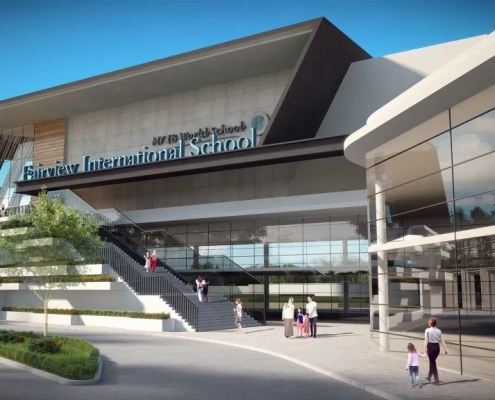
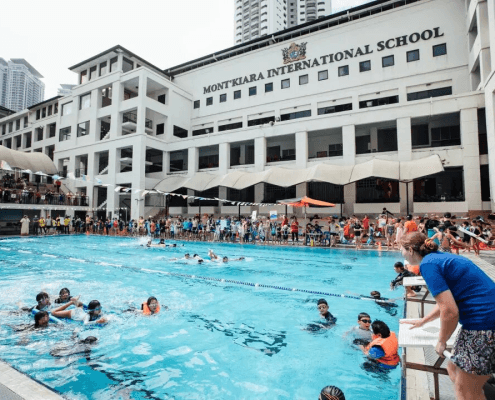
International Schools

International schools in Malaysia are private institutions that use English as the primary medium of instruction and offer globally recognized curricula from countries such as the UK, USA, Canada, and Australia.

Secondary-level programs typically include:

  • IGCSE (UK Cambridge O-Level)
  • GCE A-Level
  • International Baccalaureate (IB)

Currently, around 50,000 students are enrolled in approximately 150 international schools across major cities in Malaysia, many of which are known for their strong academic standards and global reputation.

Higher Education

Malaysia’s higher education sector is well-developed, with a wide range of public and private universities offering diverse academic programs and professional faculty.

Private universities generally conduct classes in English and collaborate with institutions in the UK, USA, Canada, Australia, and New Zealand through twinning programs and credit transfer schemes. This creates a high-quality international education model that promotes global exposure and cross-cultural exchange.

Today, Malaysia hosts approximately 150,000 international students from over 180 countries, including more than 12,000 students from China.

In recent years, many prestigious universities have established branch campuses in Malaysia, including:

  • University of Nottingham (UK)
  • Newcastle University (UK)
  • University of Southampton (UK)
  • University of Reading (UK)
  • Heriot-Watt University (UK)
  • Monash University (Australia)
  • Curtin University (Australia)
  • Swinburne University (Australia)
  • Raffles University (Singapore)
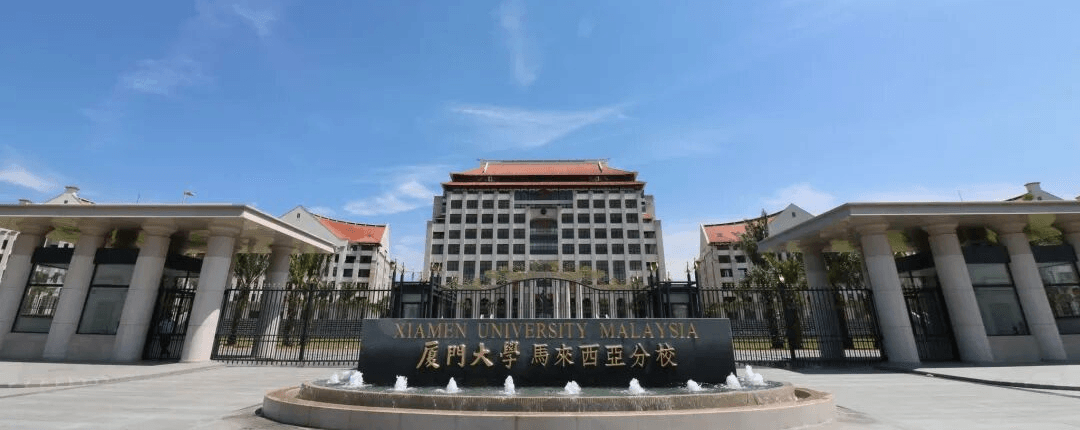
  • Xiamen University (China)
  • Shanghai Jiao Tong University (China)

International Schools vs Private Schools

There are several key differences between international schools and private primary/secondary schools in Malaysia:

1. Curriculum

  • International Schools:
    Offer globally recognized curricula such as IGCSE, A-Level, IB, or AP. These are ideal for students planning to study abroad.
  • Private Schools:
    Primarily follow the Malaysian national curriculum, though some may incorporate elements of international programs. They are more aligned with local examinations such as SPM and STPM.

2. Student Demographics

  • International Schools:
    Mainly attended by expatriate students, along with a growing number of local students seeking international pathways.
  • Private Schools:
    Predominantly local students, with some international enrolment. Education is generally more locally oriented.

3. Tuition Fees

  • International Schools:
    Generally higher fees, especially for schools offering international curricula. Fees often include learning materials and extracurricular activities, ranging from several thousand to over ten thousand Malaysian Ringgit annually.
  • Private Schools:
    More affordable compared to international schools, making them a popular choice for local families.

4. Language of Instruction

  • International Schools:
    Primarily English, with additional language options such as Mandarin or French.
  • Private Schools:
    Typically use Malay and English. Chinese Independent Schools emphasize Mandarin, while also offering English and Malay.

5. Teaching Style and Assessment

  • International Schools:
    Focus on critical thinking, creativity, and global perspectives. Assessment methods are diverse, including coursework, projects, and presentations—not just exams.
  • Private Schools:
    Tend to be more exam-oriented, especially in preparation for national examinations like SPM and STPM. Assessment is more focused on academic results and final exams.

well-structured education system

With its well-structured education system, reasonable tuition fees, high-quality teaching, and multicultural environment, Malaysia continues to strengthen its position as a leading education hub in Southeast Asia—attracting an increasing number of students from around the world.